Hemant Gupta — Agreements Deep Dive
Agreements In Word Deep Dive / Jun 2023 – May 2025

Design System Foundation + End-to-End Template Journey

In this phase, I combined system stewardship and product ownership: I carried Content Assembly primitives into Agreements as a reusable component language, and I drove the full Template Creation journey plus connected eSignature workflows through repeated experience reviews.

From CA Components to Agreements Consistency

I treated the design system as operating infrastructure, not visual polish. I brought CA component primitives into Agreements to create a shared implementation vocabulary, including interaction patterns, field semantics, and composition structures that helped multiple designers ship to one quality bar. In practice, this reduced drift across template-related surfaces and shortened review cycles because decisions were made through reusable primitives instead of ad hoc screens.

This framing is grounded in the same evidence stream that tracked my broader work in this era: recurring ER cycles, design artifacts, and cross-functional reviews tied to template creation and adjacent workflows.
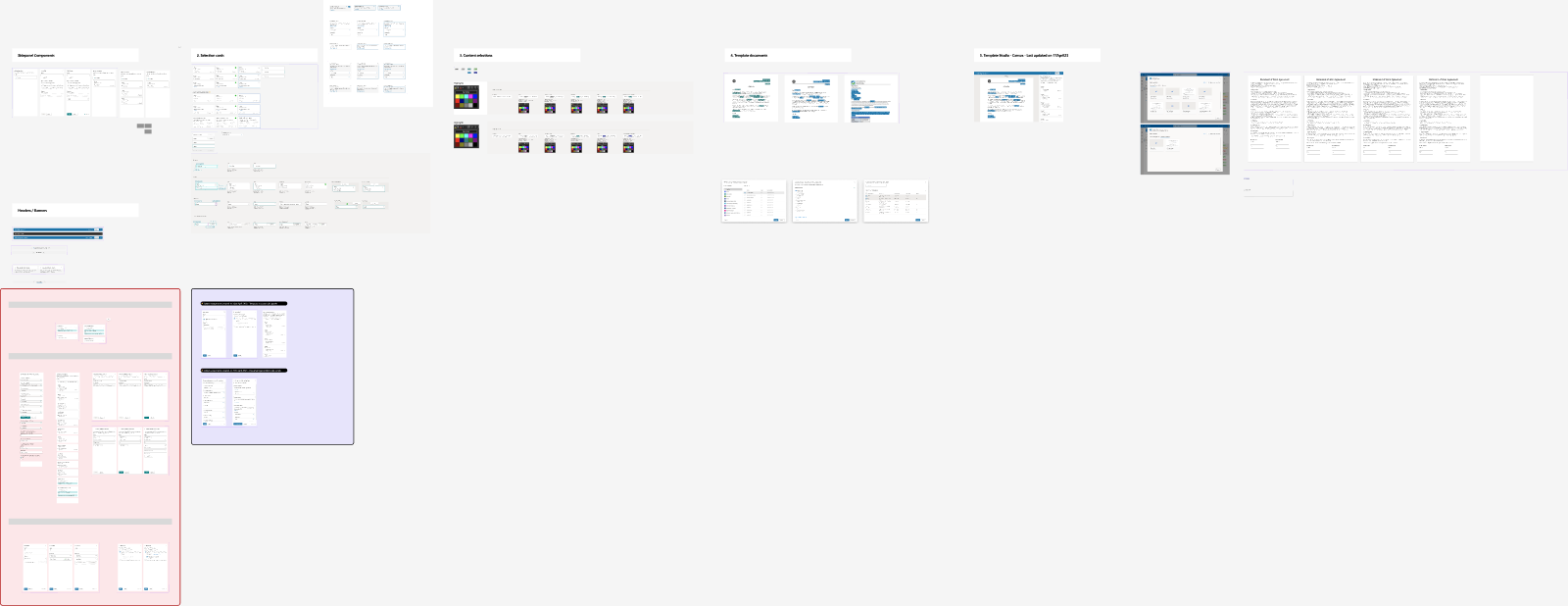
CA Components Library Open in Figma
Content Assembly component library overview
Design leadership move: use one component language to align delivery across designers during the Agreements scale-up phase.
End-to-End Ownership, Not Partial Contribution

I drove the Template Creation journey as a coherent end-to-end flow, not a set of disconnected screens: create template, set details, define fields, configure conditions, connect data, prepare approvals and signatures, then publish. I treated experience-review findings as inputs for architecture-level changes, not patch fixes.

  • Setup details I shaped template metadata and setup behavior to reduce handoff ambiguity and improve author confidence.
  • Conditional sections ER feedback repeatedly surfaced condition-building complexity, and I used that signal to iterate on flow clarity and structure.
  • Capability expansion I moved the experience beyond CA-in-Word migration by introducing behaviors needed for production legal workflows.
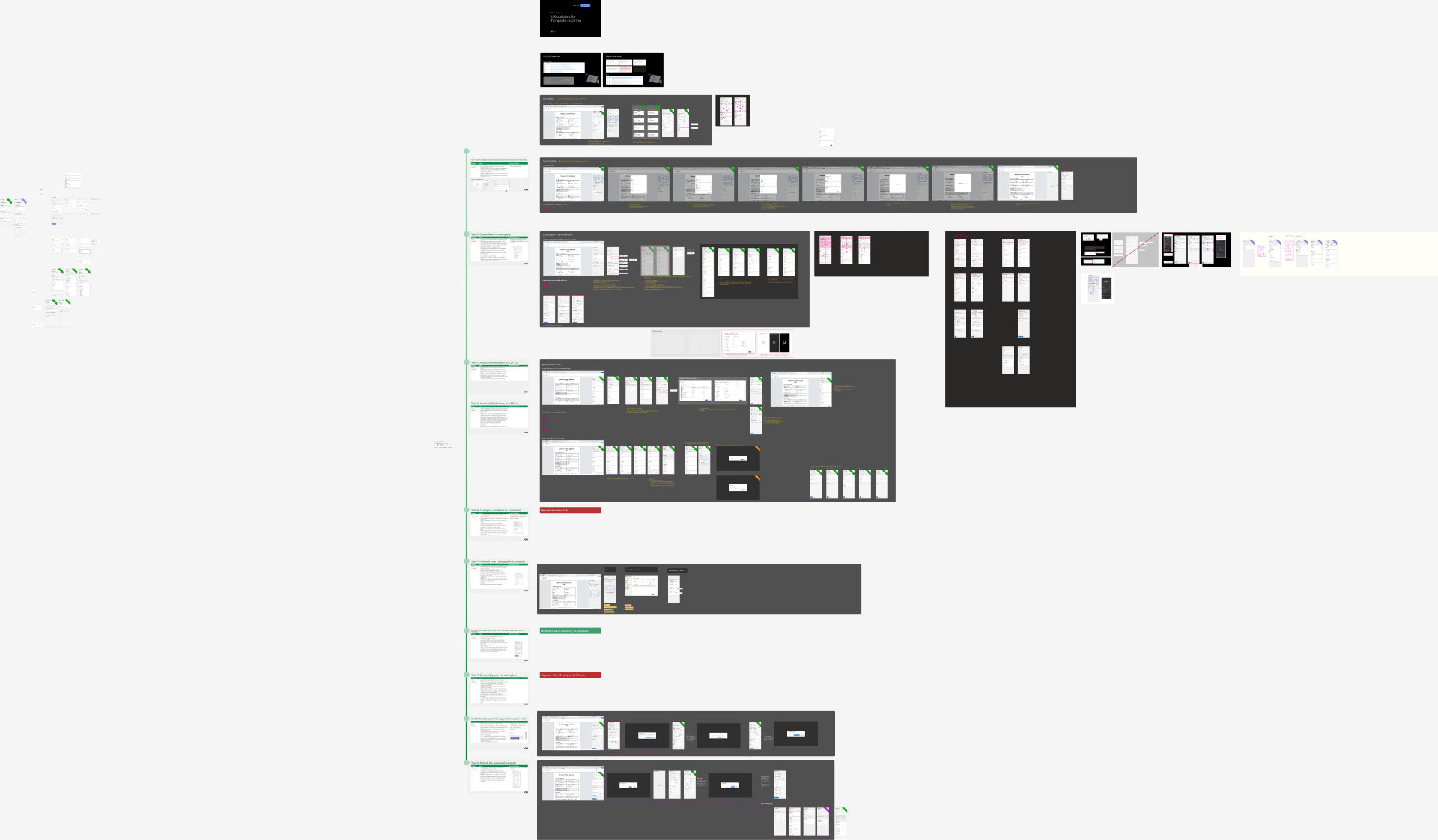
Manage Templates Experience Review Open in Figma
Manage templates experience review mockups
Review pattern: journey-level critiques were used to tighten flow continuity, not just local UI corrections.
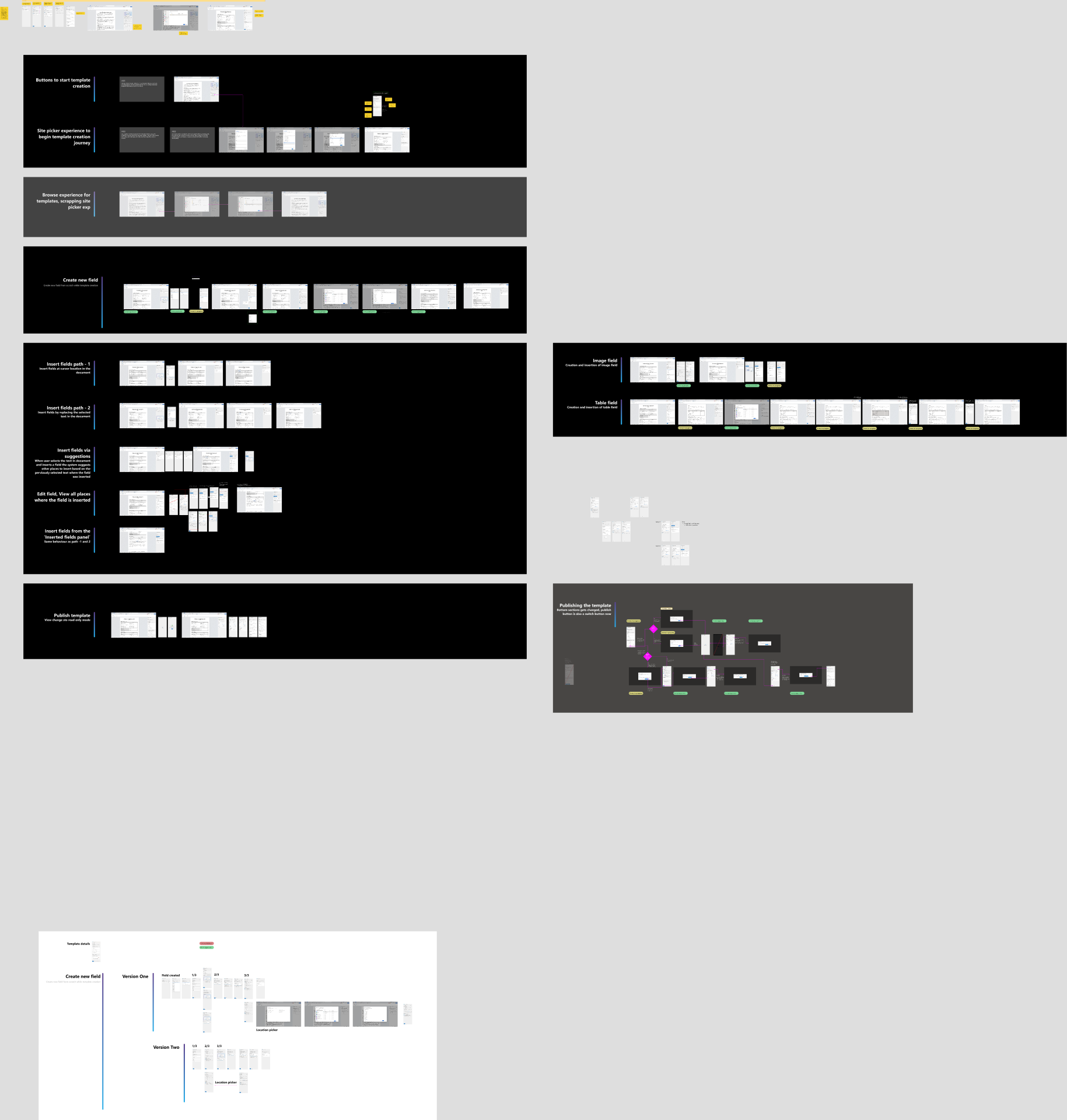
Template Creation UX Updates Open in Figma
Template creation UX updates and pre-ER to ER refinements
Outcome: pre-ER to ER updates show intentional iteration on information architecture and authoring cognition.
1P eSignature Workflow Story (E2E)

Within the E2E template journey, I treated 1P eSignature as a final-mile workflow quality problem: authors needed a clear path from template setup to signing readiness, without losing context across document-generation states. I focused the design on sequencing, status clarity, and task continuity so users could move from authoring decisions to send, cancel, and tracking actions with fewer handoff errors.

The same ER thread that validated my template-creation ownership also captured eSignature ownership signals around send/cancel/status tracking, so this workflow is part of one continuous journey rather than a separate add-on.

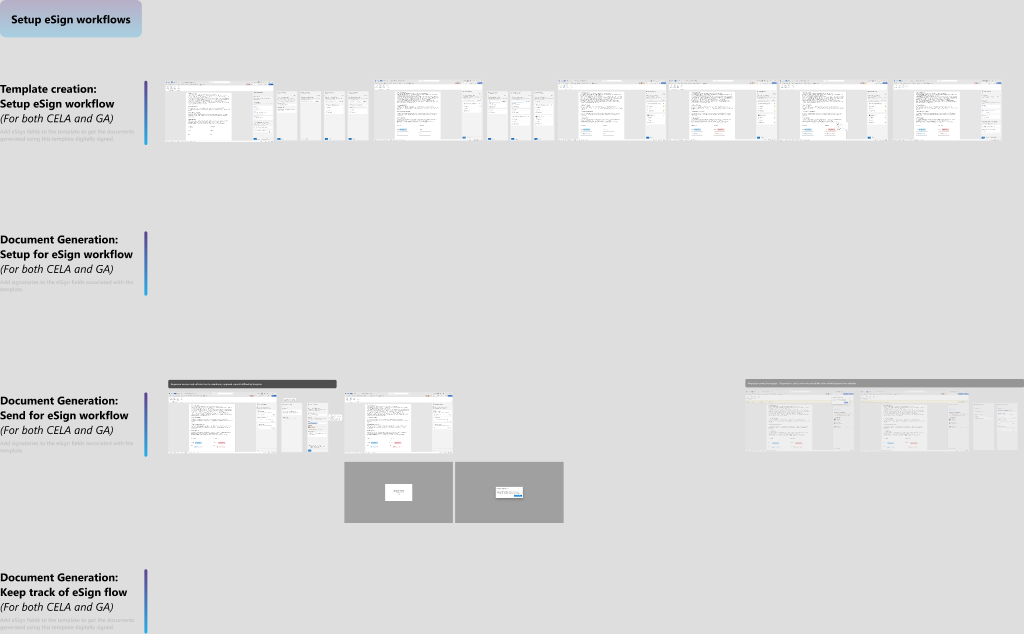
1P eSignature Workflow in Template + DocGen Open in Figma
1P eSignature workflow design for Syntex template and document generation
Design intent: maintain authoring-to-signing continuity by tightening transition states, action visibility, and workflow feedback loops.
Senior product design here was less about owning isolated screens and more about making a growing team ship coherent outcomes through shared primitives and journey-level decision quality.